 Podform3D
How Much Do Custom Orthotics Cost? In-Clinic vs Lab Pricing
Custom orthotics cost ranges significantly depending on your sourcing model. Understanding how much do custom orthotics cost is critical for clinicians evaluating their cost structure. Traditional orthotic labs charge clinics between $50-$150 per pair, while in-clinic 3D printing with Podform3D reduces per-unit material costs to approximately $10 per pair. This article breaks down the real economics of custom orthotics cost across three delivery models so you can make an informed decision about your clinic's sourcing strategy.
Whether you're running a solo podiatry practice or managing a multi-clinician group, the choice between traditional lab orthotics, outsourced 3D printing, and in-clinic manufacturing significantly impacts your clinic's profitability and patient turnaround times.

Understanding Custom Orthotics Cost
The term "custom orthotics cost" encompasses both the direct material costs and the operational expenses associated with producing or sourcing foot orthotics. For clinicians, understanding this distinction is essential because it affects your net margin on each prescription.
Custom orthotics serve as a critical revenue stream for many practices. Proper understanding of custom orthotics cost allows you to price competitively while maintaining healthy margins. The key variables influencing cost include:
- Manufacturing method (traditional lab, 3D printing, or hybrid)
- Production volume at your clinic
- Capital investment requirements
- Subscription or per-unit pricing models
- Turnaround time needs for patients
- Quality and customization requirements
Traditional Lab Orthotics Pricing
Traditional orthotic laboratories have been the standard sourcing method for decades. Understanding their pricing structure helps frame the comparison with newer manufacturing approaches.
Per-Pair Lab Costs
Most traditional orthotic labs charge podiatry clinics between $50-$150 per pair depending on the orthotic type, customization level, and your volume with the lab. Premium custom molded orthotics typically fall in the $80-$150 range, while semi-custom options may be $50-$80.
These costs cover material, labor, manufacturing overhead, and the lab's profit margin. When you factor in patient pricing (typically $300-$600 per pair retail), the lab captures a significant portion of the orthotic revenue stream that your clinic could otherwise retain.
Turnaround Time
Traditional labs typically require 7-14 days for manufacture and shipping. Rush orders may incur additional fees of $20-$50 per pair. For clinicians with patients needing urgent care or athletes requiring quick treatment turnaround, these extended timelines can be frustrating.
Capital Requirements
Traditional lab outsourcing requires minimal upfront investment beyond basic office supplies for casting and shipping. There's no equipment to purchase, though you may need to invest in casting materials, molds, and packaging supplies.
In-Clinic 3D Printing Orthotics Cost
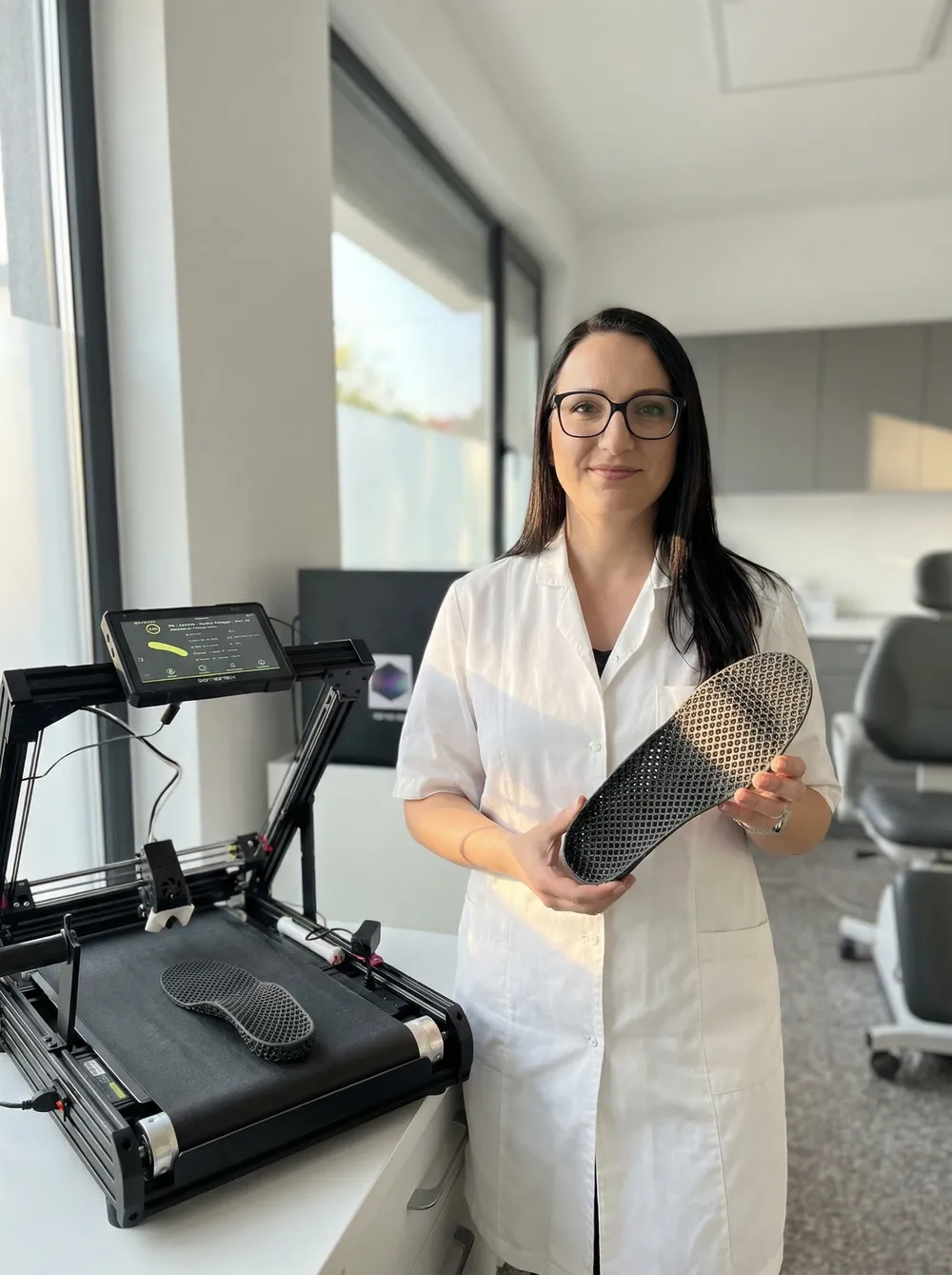
In-clinic 3D printing represents a paradigm shift in how orthotics are manufactured. Podform3D's model enables clinics to produce custom 3D printed orthotics directly in their practice, fundamentally changing the economics of custom orthotics cost.
Subscription and Setup Costs
Podform3D operates on a subscription model of $999 per month, providing unlimited access to the software platform, design optimization algorithms, and manufacturing protocols. Additionally, there's a one-time printer setup and installation fee of $1,500.
The subscription includes continuous software updates, training resources, and access to the Podform3D clinical support team. This is significantly different from the traditional per-pair pricing model.
Per-Pair Material Costs
The actual material cost for 3D printed orthotics is approximately $10 per pair. This includes the thermoplastic material, any reinforcement materials, and minimal manufacturing waste. Once you've covered your monthly subscription, each additional pair only costs you $10 in direct materials.
Capital Investment
Beyond the $1,500 setup fee, you'll need the physical 3D printer equipment. Most clinics can integrate the printer into their existing workflow with minimal additional space requirements. A typical printer footprint is approximately 2-3 square feet.
Turnaround Time
In-clinic 3D printing delivers orthotics in 1-3 days, often the same day or next business day. This rapid turnaround is a competitive advantage for your clinic and improves patient satisfaction. No shipping delays, no lost pairs in transit, no communication barriers with external labs.
Outsourced 3D Printing (Partner Network)
For clinicians not ready to invest in in-clinic equipment, outsourced 3D printing through partners like Podform3D's partner network offers a middle ground between traditional labs and full in-clinic manufacturing.
Pricing Structure
Outsourced 3D printing typically costs $60-$130 per pair, comparable to premium traditional labs but with superior customization and faster turnaround. The per-pair cost is higher than in-clinic production but provides flexibility without capital investment.
Quality and Customization
Outsourced 3D partners use the same advanced design optimization software as in-clinic systems, delivering superior fit and customization compared to traditional labs. You maintain design control while outsourcing manufacturing.
Turnaround Time
Outsourced 3D manufacturing typically takes 3-5 business days, faster than traditional labs and slower than in-clinic production but still competitive for most clinical needs.
Cost Comparison Table: Orthotics Pricing Models
| Cost Factor | Traditional Lab | In-Clinic 3D Printing | Outsourced 3D |
|---|---|---|---|
| Per-Pair Cost | $50-$150 | $10 (materials only) | $60-$130 |
| Monthly Subscription | None | $999 | None |
| One-Time Setup | Minimal ($0-$500) | $1,500 | None |
| Turnaround Time | 7-14 days | 1-3 days | 3-5 days |
| Capital Investment | Minimal | Printer hardware + $1,500 setup | None |
| Material Costs | Included in per-pair fee | $10/pair | Included in per-pair fee |
| Design Control | Limited customization | Full in-house control | Full design control |
| Quality Consistency | Lab-dependent variable | 100% consistent (your process) | Partner-dependent |
ROI Analysis: 30-Pair Per Month Clinic Example
Scenario: Podiatry clinic producing 30 custom orthotic pairs per month
Traditional Lab Model:
- Per-pair cost: $100 (average)
- Monthly manufacturing cost: 30 pairs × $100 = $3,000
- Patient charge per pair: $400
- Monthly revenue: 30 × $400 = $12,000
- Monthly gross profit: $12,000 - $3,000 = $9,000
- Net margin: 75%
In-Clinic 3D Printing Model (Year 1):
- Monthly subscription: $999
- Per-pair material cost: $10
- Monthly material cost: 30 pairs × $10 = $300
- One-time setup (first month): $1,500
- Total monthly cost (first month): $999 + $300 + $1,500 = $2,799
- Total monthly cost (subsequent months): $999 + $300 = $1,299
- Monthly revenue: 30 × $400 = $12,000
- First month gross profit: $12,000 - $2,799 = $9,201
- Subsequent months gross profit: $12,000 - $1,299 = $10,701
- Net margin: 89% (after month 1)
Break-Even Analysis:
The in-clinic model pays for itself in the first month. At 30 pairs per month, you break even in approximately 15 days and realize an additional $1,701 in monthly profit compared to the traditional lab model.
Year 1 Financial Impact:
- Traditional lab total cost: $3,000 × 12 = $36,000
- In-clinic 3D printing total cost: $2,799 + ($1,299 × 11) = $16,288
- Annual savings: $36,000 - $16,288 = $19,712
Key Insight: Even accounting for the $1,500 setup fee and $999 monthly subscription, moving to in-clinic 3D printing saves this hypothetical clinic nearly $20,000 in year one while improving patient turnaround time and maintaining or increasing quality.
Hidden Costs to Consider in Your Analysis
When evaluating custom orthotics cost, consider these often-overlooked expenses:
Traditional Lab Hidden Costs
- Rush fees: $20-$50 per pair for expedited turnaround
- Casting materials: Foam molds, plaster, and shipping containers ($2-$5 per pair)
- Communication overhead: Phone calls, emails, and follow-ups with lab staff
- Lost pairs in transit: Approximately 2-3% loss rate across shipping
- Quality issues: Remakes due to lab errors cost time and money
In-Clinic 3D Printing Hidden Costs
- Staff training: Initial learning curve (typically 1-2 weeks)
- Maintenance: Printer maintenance supplies and occasional repairs ($50-$100/month)
- Ongoing education: Staying current with software updates and best practices
Pricing Strategy: How to Price Custom Orthotics
Understanding your cost structure allows you to develop a competitive pricing strategy. Current market rates for custom orthotics range from $300-$600 per pair depending on complexity and your market position.
Pro Tip: If you reduce your manufacturing cost from $100 to $10 per pair through in-clinic 3D printing, you don't need to reduce patient pricing. Instead, maintain market-rate pricing and realize substantially higher margins. Alternatively, you can offer more competitive pricing to capture additional market share while maintaining superior margins compared to lab-dependent practices.
Beyond Cost: Additional Benefits of In-Clinic Production
While custom orthotics cost reduction is the primary financial driver, in-clinic 3D printing offers clinical benefits that impact your practice beyond the balance sheet:
- Rapid iteration: Adjust designs based on patient feedback without lengthy remake processes
- Design consistency: Your orthotics follow your specifications exactly, every time
- Patient satisfaction: Same-day or next-day delivery exceeds patient expectations
- Competitive advantage: Offer orthotics that competitors cannot match quickly
- Clinical control: Maintain full control over design parameters and material selection
- Research capability: Test new designs and treatment protocols in-house
Making the Decision: Lab vs. In-Clinic vs. Outsourced
Your decision should consider:
- Monthly volume: Clinics producing 20+ pairs monthly typically benefit from in-clinic production within 6-12 months
- Patient base: If rapid turnaround is a competitive priority, in-clinic production justifies the investment
- Capital availability: The $1,500 setup plus printer investment requires available capital
- Growth trajectory: Plans to expand orthotics volume support moving to in-clinic production
- Quality focus: If precision customization is clinically important, in-clinic gives you control
For clinics with lower volume (under 15 pairs/month), outsourced 3D printing provides the quality and customization benefits of modern manufacturing without the capital investment. Traditional labs remain viable for clinics with minimal orthotics revenue and no plans to expand.
Conclusion: Understanding Custom Orthotics Cost in Your Practice
Custom orthotics cost structures vary dramatically across manufacturing models. Traditional lab outsourcing costs $50-$150 per pair and dominates the current market. In-clinic 3D printing with Podform3D costs only $10 per pair in materials plus a $999 monthly subscription, fundamentally improving the economics for clinics producing 20+ pairs monthly.
For a clinic producing 30 pairs monthly, switching from traditional labs to in-clinic 3D printing can save nearly $20,000 annually while improving turnaround time and patient satisfaction. The decision comes down to your current volume, growth plans, and the relative importance of rapid turnaround in your clinical model.
The economics strongly favor in-clinic production for mid-to-high volume practices. Calculate your exact financial situation using your actual production numbers to determine if in-clinic 3D printing makes sense for your practice.
Calculate Your Exact Savings
See how much your clinic could save with in-clinic 3D printed orthotics. Our ROI calculator accounts for your specific volume, current lab costs, and practice expenses.
Calculate Your Savings Now