Understanding Plantar Fasciitis
Plantar fasciitis represents one of the most common causes of heel pain, affecting millions of individuals worldwide. The condition arises from inflammation of the plantar fascia, a dense band of connective tissue that extends from the heel through the arch of the foot to the base of the toes. This tissue serves as a critical structural element, supporting the arch and distributing forces during weight-bearing activities.
The condition typically develops through a combination of biomechanical factors including excessive pronation, inadequate arch support, tight calf muscles, and repetitive strain. Patients commonly report acute pain in the heel, particularly during the first steps after waking or prolonged rest periods. While acute inflammation usually subsides within weeks, chronic cases can persist for months or years without appropriate intervention, significantly impacting quality of life and functional capacity.

The Biomechanics of Plantar Fasciitis and How Orthotics Address Underlying Issues
The Fascial Loading Problem
In plantar fasciitis, the plantar fascia experiences excessive tensile loading, particularly at its proximal attachment on the calcaneus. This occurs when the arch collapses during the stance phase of gait, creating a whipping mechanism that generates repetitive microtrauma. Custom orthotics intervene by stabilizing the arch, reducing the excessive motion that exacerbates this loading pattern and allowing the inflamed tissue to heal.
Strategic Arch Support and Load Redistribution
Effective orthotics for plantar fasciitis operate through several biomechanical principles. First, they provide graduated arch support that maintains foot posture during weight-bearing activities. By preventing excessive pronation and medial arch collapse, orthotics reduce the strain on the plantar fascia. Second, they redistribute plantar pressures away from high-stress zones, particularly the medial midfoot and heel. This load-sharing mechanism allows inflammation to resolve while maintaining normal functional capacity.
Heel Cushioning and Shock Attenuation
The heel region requires specialized attention in plantar fasciitis management. Custom orthotics incorporate targeted heel cushioning that attenuates the impact forces transmitted through the calcaneus during heel strike. This shock-absorption function reduces the repetitive mechanical stimulus that perpetuates inflammation. Unlike generic inserts, custom devices can calibrate cushioning density to match individual body weight, gait mechanics, and tissue tolerance.
Why Custom Orthotics Outperform Generic Solutions
Dimensional Precision and Individual Anatomy
Generic orthotics, while providing basic support, cannot account for the unique anatomical features of individual feet. Custom orthotics are fabricated based on precise digital scans or casts of the patient's feet, capturing the exact contours, arch height, forefoot geometry, and heel dimensions. This dimensional accuracy ensures optimal contact pressure distribution and eliminates the gaps and pressure points that compromise the effectiveness of off-the-shelf solutions.
Zone-Specific Density Control
A critical advantage of custom manufacturing is the ability to vary material density across different regions of the orthotic. The medial arch zone can be firmed for maximum support, the midfoot region can be softened for comfort, and the heel can incorporate multiple density layers for progressive cushioning. This sophisticated approach addresses the complex, multi-planar loading patterns in plantar fasciitis more effectively than uniform generic devices.
Functional Modifications and Posting
Custom orthotics can incorporate specific modifications unavailable in mass-produced options. These include precise rearfoot posting angles tailored to individual subtalar joint mechanics, custom forefoot extensions, and medial arch contours calibrated to the patient's intrinsic foot strength and ligamentous laxity. Such modifications transform an orthotic from a passive support device into a biomechanically intelligent intervention.
3D-Printed Orthotics: Advancing Precision Treatment for Plantar Fasciitis
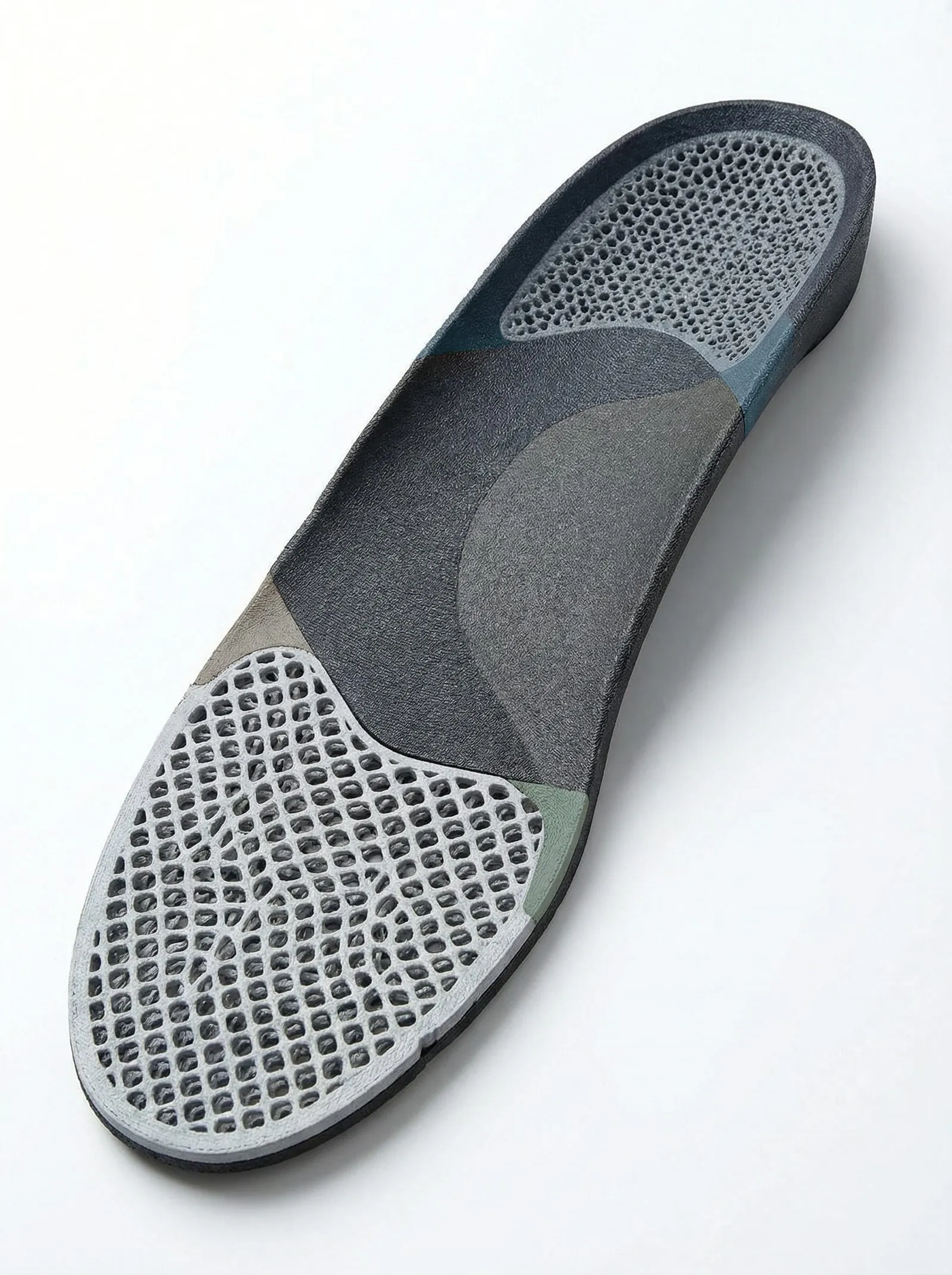
Multi-Density Architecture for Targeted Zone Therapy
3D printing technology enables the creation of orthotics with precisely controlled multi-density zones that would be impossible to achieve through traditional manufacturing. The arch region can incorporate a firm, structurally supportive density that resists deformation, while the heel features a softer, viscoelastic density that absorbs impact forces. The plantar surface can incorporate strategic stiffness gradients that guide foot mechanics without creating pressure peaks.
Independent Arch and Heel Management
One of the most significant innovations in 3D-printed orthotics for plantar fasciitis is the ability to address the arch and heel as biomechanically independent zones. The medial arch receives firm support to prevent collapse, while the heel accommodates individual cushioning requirements based on body weight and tissue sensitivity. This decoupled approach resolves a fundamental limitation of conventional orthotics, where a stiff arch often means an overly rigid heel and vice versa.
Anatomical Accuracy and Minimal Adjustment Time
Digital fabrication eliminates manual adjustments and trial-and-error fitting. The orthotic emerges from production with precise geometry matched to the patient's foot anatomy. This accuracy dramatically reduces the adjustment period, allowing patients to achieve therapeutic benefit within days rather than weeks, and minimizing the discomfort and non-compliance often associated with lengthy break-in periods.
Clinical Evidence Supporting 3D-Printed Orthotics for Plantar Fasciitis
Landmark Research on 3D-Printed Ankle-Foot Orthoses
A comprehensive clinical study published in the Journal of Orthopaedic Research (PMID: 30191090, PMC6394143) evaluated 3D-printed ankle-foot orthoses and their biomechanical effects on gait and plantar fascia loading. The research demonstrated that 3D-printed devices achieved superior pressure distribution compared to conventional thermoplastic orthoses, with statistically significant reductions in peak plantar pressures in the medial midfoot and heel regions. Patients wearing 3D-printed orthotics reported improved comfort scores and faster functional recovery than those using conventional devices.
Key Findings: The study confirmed that multi-density 3D-printed architecture effectively reduces plantar fascia strain, particularly when zones of varying stiffness are strategically positioned. The precision of digital manufacturing translated to clinically meaningful reductions in mechanical stress on inflamed tissue.
Additional research in prosthetics and orthotics literature consistently demonstrates that patient-specific, anatomically precise orthotics achieve superior outcomes in plantar fasciitis management compared to generic alternatives. The ability to control material properties at the millimeter scale—a capability unique to 3D printing—creates quantifiable biomechanical advantages that translate to reduced pain, faster healing, and improved long-term outcomes.
What to Look for in Orthotics for Plantar Fasciitis
Arch Support Characteristics
- Height and Contour: The arch support should match your individual arch height and shape, neither too aggressive (causing midfoot strain) nor too shallow (failing to provide adequate support).
- Material Stiffness: Firm support in the medial arch prevents collapse without creating discomfort. The support should feel naturally integrated with your foot structure.
- Transition Quality: Smooth transitions between arch support and adjacent regions prevent pressure concentration points that could transfer pain from one area to another.
Heel Cushioning Elements
- Progressive Density: Multiple layers of cushioning material with varying densities provide shock absorption without bottoming out during heavy activity.
- Cup Depth and Shape: A properly contoured heel cup surrounds the calcaneus, distributing pressure evenly and preventing side-to-side motion.
- Impact Attenuation: Heel cushioning should noticeably reduce the sharp pain during heel strike while maintaining ground contact feel and balance.
Overall Fit and Comfort Profile
- Zero Pressure Points: Custom orthotics should make contact across the entire foot surface without creating focal pressure peaks.
- Minimal Break-in Period: Properly designed orthotics feel beneficial within the first few days of use. Extended break-in periods suggest fit problems.
- Accommodation for Shoe Compatibility: Effective orthotics work seamlessly within your preferred footwear without requiring special shoe modifications.
For Practitioners: Offering Same-Day Custom Orthotics for Plantar Fasciitis
Clinicians managing plantar fasciitis now have the opportunity to offer patients immediate, evidence-based orthotic solutions through 3D printing technology. The advantages for clinical practice are substantial:
Same-Day Dispensing and Patient Compliance
Digital scanning and rapid manufacturing enable orthotic fabrication in hours rather than days or weeks. Same-day delivery dramatically improves patient compliance and satisfaction. Patients experience immediate relief rather than extended waiting periods, and can begin their rehabilitation program without delay. This efficiency reduces follow-up appointment burdens and administrative costs.
Precision Data Capture for Outcome Measurement
Digital foot scans create objective records of foot geometry and changes over time. This data enables outcome tracking, allows refinement of prescriptions based on healing progress, and provides documentation for insurance and liability purposes. Digital records facilitate remote consultations and enable rapid orthotic updates as patient needs evolve.
Clinical Differentiation and Revenue Optimization
Offering custom 3D-printed orthotics positions clinical practices at the forefront of evidence-based care. The ability to deliver precise, rapidly-manufactured devices that demonstrably outperform generic alternatives becomes a competitive differentiator. 3D printing technology investment enables clinics to capture the full orthotic value chain, improving margins while providing superior patient outcomes.
Building Your Orthotic Program
Successful implementation requires assessment of patient volume, investment in scanning and printing equipment, and staff training. Free samples and evaluation materials help practitioners understand the quality and handling characteristics of 3D-printed orthotics before committing to full-scale implementation. Many clinics begin with plantar fasciitis cases, where the clinical benefits are most obvious, then expand to other pathologies as expertise develops.
Ready to Evaluate 3D-Printed Orthotics for Your Plantar Fasciitis Patients?
Healthcare practitioners can request a free sample evaluation kit to examine the quality, precision, and patient-reported benefits of 3D-printed custom orthotics firsthand.
Order a Free Sample to EvaluateFor Patients: Finding Professional Orthotic Care
If you are experiencing plantar fasciitis symptoms, professional evaluation and custom orthotic fitting represent evidence-based first-line treatments. Podform3D has partnered with podiatrists and other foot care specialists who understand the clinical principles behind precision orthotics and can provide individualized treatment plans.
The path to recovery from plantar fasciitis typically involves accurate diagnosis, biomechanical assessment, and precisely fitted orthotics combined with complementary care such as stretching, activity modification, and strengthening exercises. With modern 3D-printed custom orthotics, effective relief is achievable without surgery, lengthy treatment periods, or the frustration of ineffective generic solutions.
Find a Podform3D Clinic Near You
Locate a healthcare provider offering Podform3D 3D-printed orthotics in your area and take the first step toward resolving plantar fasciitis pain.
Find a ProviderConclusion: Precision-Based Solutions for Plantar Fasciitis
Plantar fasciitis responds best to orthotics that combine accurate biomechanical assessment with precision manufacturing. The evolution from generic off-the-shelf devices to custom 3D-printed orthotics represents a fundamental improvement in clinical care, supported by biomechanical theory and validated through clinical research. The ability to create multi-density zones, achieve anatomically precise arch and heel support, and manufacture orthotics with minimal lead time transforms plantar fasciitis from a chronic, disabling condition into a manageable problem with excellent prognosis.
Whether you are a healthcare practitioner seeking to offer advanced orthotic solutions or a patient seeking relief from heel pain, custom 3D-printed orthotics represent the current standard in evidence-based plantar fasciitis management. The clinical data is clear: precision engineering delivers superior outcomes that justify the move beyond generic solutions toward individualized, anatomically informed care.